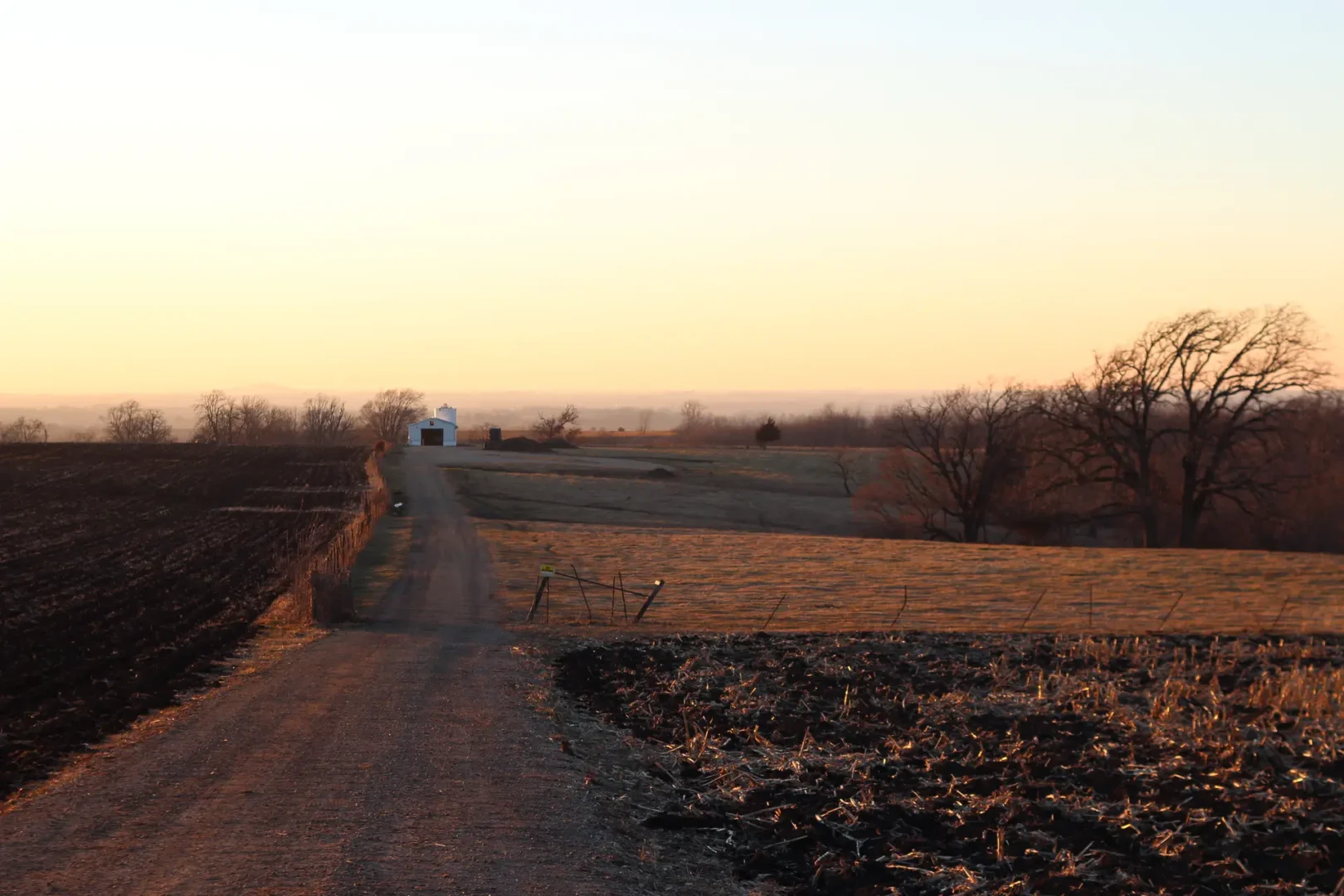
Below: how it works, how a cash sale compares with listing it, what to have ready, and the Wisconsin tax and closing rules that change what you net. Prefer to sell it yourself? Start with our guide to selling vacant land yourself.
How selling to us works in Wisconsin
- Send the address or APN, the acreage and any access or utility notes for your Wisconsin parcel. No obligation.
- We check it against comparable listings and county assessments in Milwaukee and Dane and the rest of Wisconsin.
- You get an offer, or a clear reason we cannot make one, and you decide.
- A title or escrow company closes the sale and the county register of deeds records the deed. No agent commission; normal closing costs apply.
Cash sale, agent listing or selling it yourself in Wisconsin
- Sell to us for cash: no listing, no showings, no commission. The tradeoff is price. Expect an offer below what a patient retail buyer might pay, in return for speed and certainty.
- List with an agent: you reach retail buyers, mostly around Milwaukee and Madison, but you pay a commission and wait for a buyer. For land that can run to months.
- Sell it yourself: you keep the commission and handle pricing, photos, questions and paperwork. You can list on AcreageSale.
How to sell vacant land yourselfList it yourself with the AI lister
When a cash sale makes sense for Wisconsin land
- Inherited Wisconsin land you do not want to manage from a distance.
- You live outside Wisconsin and cannot walk the parcel or meet buyers.
- Taxes and upkeep cost you every year it sits.
- A listing went stale, or the land is remote or has access or title questions.
- The land owes property tax. The state rules are below.
What to have ready for your Wisconsin parcel
- The address or APN, the acreage, and what the land is: Northwoods recreational and hunting acreage (Vilas, Oneida, Sawyer, Bayfield counties) and inland lake lots, or something else.
- Road access: paved, dirt or an easement.
- Power and water, or a well.
- Back taxes, liens or an unsettled estate. They change the paperwork, not whether you can ask.
Selling land in Wisconsin: transfer taxes and land-tax rules
Wisconsin imposes a real estate transfer fee on the grantor, at 30 cents for each $100 of value or fraction of $100 on every conveyance that is not exempt, which works out to $3 per $1,000 (Wis. Stat. 77.22). The register of deeds collects it when the deed is submitted for recording, and a return signed by both the grantor and the grantee is filed with the deed. For a land contract, the value is the total principal the buyer agrees to pay the seller.
Selling Wisconsin land with back taxes
Wisconsin counties collect delinquent property taxes by issuing a tax certificate and later taking a tax deed. Any person may redeem land described in a tax certificate before the tax deed based on it is recorded, by paying the county treasurer the unpaid taxes stated in the certificate plus interest and penalty under s. 74.47, computed from the date of accrual, plus other charges allowed by law. If the land is redeemed before the deed is recorded, the tax deed is void as to the land redeemed (Wis. Stat. 75.01).
Redemption can be made in partial payments of at least $20 unless the county treasurer accepts less, and partial payments do not extend the period of redemption. If you want to sell, a closing that pays the full redemption amount before a deed is recorded keeps the land. Ask the county treasurer for the certificate date and the current amount.
Wisconsin at a glance for landowners
- Deeds are recorded with the county register of deeds.
- Wisconsin has 72 counties.
- Recorded sale prices are generally searchable at the county level.
- Water law is riparian: owners of land touching a stream or lake have reasonable-use rights, sometimes with permits.
Where Wisconsin land sells fastest
Wisconsin land ranges across dairy farmland and the unglaciated Driftless Area in the south and west, the central sands, and the northern lakes-and-forest country. It sells fastest in and around Milwaukee, Madison, Green Bay, and Eau Claire. Counties owners ask about most: Milwaukee, Dane, Marathon, Oneida, Vilas, and Sawyer. Remote parcels, far from a paved road, power or water, get a different review than lots on the edge of town.
Regional markets across Wisconsin
- Northwoods: Forest and lake land in Vilas, Oneida and Iron counties, popular for cabins.
- Driftless Area: Hilly, unglaciated southwest Wisconsin, with farms, valleys and recreational land.
- Southeastern Wisconsin: Land around Milwaukee, Madison and the Illinois line, where development is intense.
Wisconsin land we review
Northwoods recreational and hunting acreage (Vilas, Oneida, Sawyer, Bayfield counties), inland lake lots, Driftless Area farm and timber tracts in the southwest, and dairy and cash-grain ground in the south.
What affects the value of Wisconsin land
Northwoods wooded hunting land is affordable per acre; lakefront anywhere in the north, and farmland in the south near Madison and Milwaukee, cost significantly more.
Wisconsin land values: what USDA data shows
USDA measured average farm real estate (all land and buildings on farms) in Wisconsin at $6,700 per acre in 2026, up 19% from $5,640 in 2022. That ranks Wisconsin 16 of the 48 states USDA reports, and it is 49% above the U.S. average of $4,500.
Pasture (grazing land), the closest USDA series to undeveloped rural land, averaged $3,500 per acre in 2026, up 25% since 2022 and above the U.S. pasture average of $2,000.
These are averages across working farms and ranches, not asking prices for any one parcel. A homesite near a town, a lot with road and power, or a parcel with water can sell well above these figures, and remote land with no access can sell well below them. Use them to see which way the market is moving and how it compares with the next state over, then check recent sales and current listings for the area you are looking at.
For comparison, USDA farm real estate averages per acre in the bordering states:
- Minnesota: $6,950 per acre in 2026 (about the same)
- Iowa: $10,100 per acre in 2026 (51% higher)
- Illinois: $9,250 per acre in 2026 (38% higher)
- Michigan: $7,000 per acre in 2026 (about the same)
Frequently asked questions
How do I get a cash offer for my Wisconsin land?
Fill out the form on this page with the parcel's address or APN and acreage. We review it and reply with an offer, or a clear reason we cannot make one.
Do I have to accept the offer?
No. The review is free and carries no obligation. You decide whether to accept what we send.
Do I pay a commission to sell my Wisconsin land to you?
No agent commission when you sell directly to us. Normal closing costs still apply.
Who records the deed when I sell land in Wisconsin?
The county register of deeds. A title or escrow company normally handles it at closing.
What land do you review in Wisconsin?
Mostly Northwoods recreational and hunting acreage (Vilas, Oneida, Sawyer, Bayfield counties), inland lake lots, and Driftless Area farm and timber tracts in the southwest, with a focus on Milwaukee and Dane and the surrounding area. Unusual parcels are welcome; the form has room for details.
Are land sale prices public in Wisconsin?
Generally yes: recorded transfers are searchable at the county level, so comparable sales can be checked.
Who pays the Wisconsin real estate transfer fee?
The grantor (seller) pays it: 30 cents per $100 of value or fraction of $100, collected by the register of deeds when the deed is recorded (Wis. Stat. 77.22).
Until when can I redeem Wisconsin land with a tax certificate?
Any person can redeem before the tax deed based on the certificate is recorded, by paying the unpaid taxes plus interest and penalty under s. 74.47 and other allowed charges. A redemption before recording voids the deed as to that land (Wis. Stat. 75.01).
How much does land cost in Wisconsin?
USDA reports farm real estate in Wisconsin averaging $6,700 per acre in 2026, against $4,500 for the United States. That is an agricultural average; vacant lots, land near towns and land with water or utilities price differently, so compare current listings for the area you want.