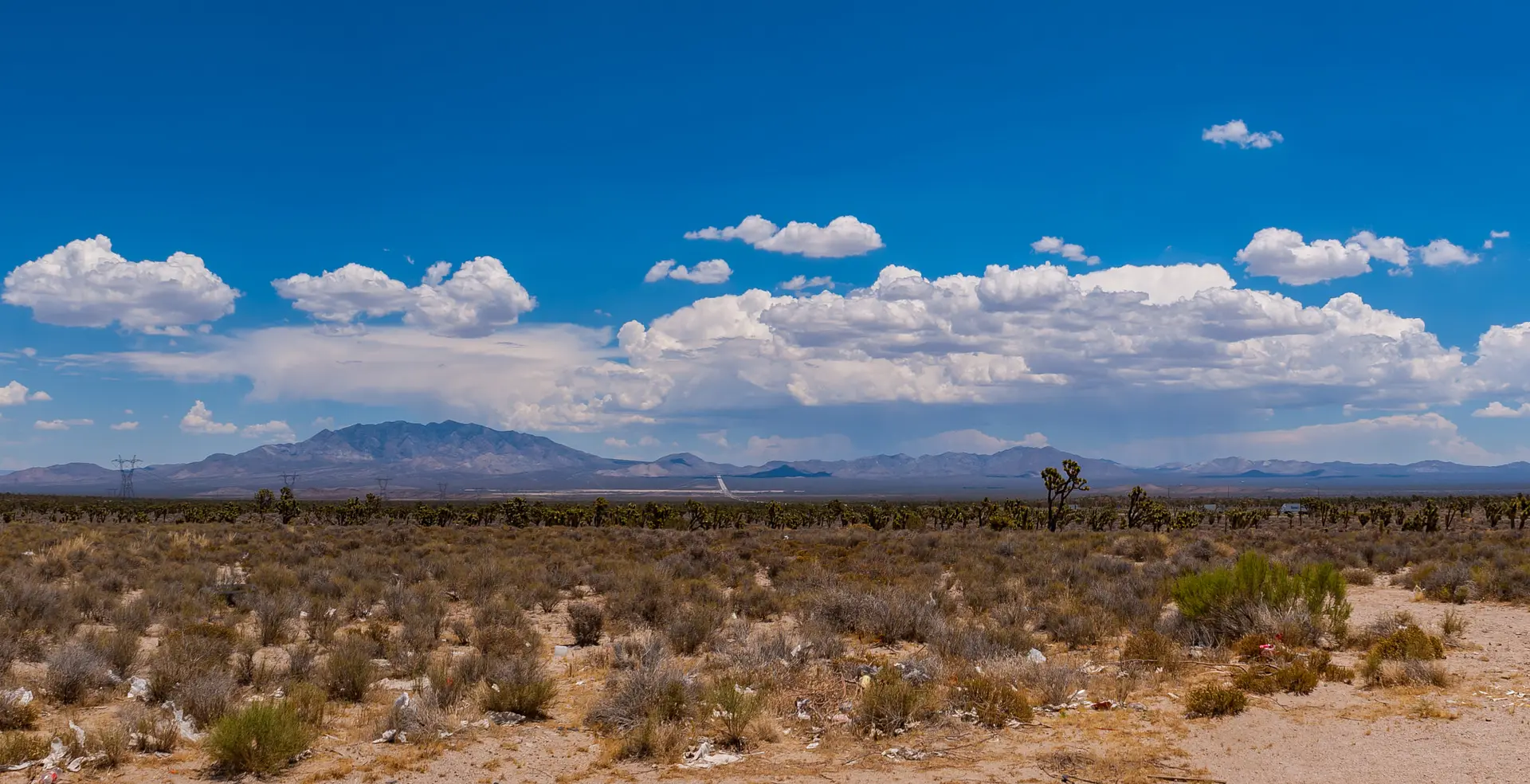
You decide whether to accept, and a title or escrow company handles the closing. The page also covers how it works, how a cash sale compares with listing it, what to have ready, and the California tax and closing rules that change what you net. Prefer to sell it yourself? Start with our guide to selling vacant land yourself.
How selling to us works in California
- Send the address or APN, the acreage and any access or utility notes for your California parcel. No obligation.
- We check it against comparable listings and county assessments in Los Angeles and San Bernardino and the rest of California.
- You get an offer, or a clear reason we cannot make one, and you decide.
- A title or escrow company closes the sale and the county recorder records the deed. No agent commission; normal closing costs apply.
Cash sale, agent listing or selling it yourself in California
- Sell to us for cash: no listing, no showings, no commission. The tradeoff is price. Expect an offer below what a patient retail buyer might pay, in return for speed and certainty.
- List with an agent: you reach retail buyers, mostly around Los Angeles and the Bay Area, but you pay a commission and wait for a buyer. For land that can run to months.
- Sell it yourself: you keep the commission and handle pricing, photos, questions and paperwork. You can list on AcreageSale.
How to sell vacant land yourselfList it yourself with the AI lister
When a cash sale makes sense for California land
- Inherited California land you do not want to manage from a distance.
- You live outside California and cannot walk the parcel or meet buyers.
- Taxes and upkeep cost you every year it sits.
- A listing went stale, or the land is remote or has access or title questions.
What to have ready for your California parcel
- The address or APN, the acreage, and what the land is: High Desert lots around the Antelope Valley, Phelan, and Joshua Tree and Central Valley ag ground, or something else.
- Road access: paved, dirt or an easement.
- Power and water, or a well.
- Back taxes, liens or an unsettled estate. They change the paperwork, not whether you can ask.
Can I sell California land if I am behind on property taxes?
Yes, and the clock matters. In California, land that stays tax-defaulted for five years becomes subject to the tax collector's power to sell (Revenue and Taxation Code 3691). The period is three years for nonresidential commercial property in counties that have not chosen the five-year schedule, and for property damaged in a declared disaster and not repaired the five years are counted from the date of the damage. Counties publish a notice of impending power to sell, so a parcel does not move to auction without warning.
Until the sale actually starts, the owner can still redeem. The right to redeem ends at the close of business on the last business day before the tax collector's sale, and it is not lost on the day the power to sell begins. Starting an installment plan within the first five years of default, and keeping it current, also keeps the parcel out of the power-to-sell category. Counties set their own deadlines for these plans, so ask your tax collector which date applies to you.
For a seller who cannot or would rather not carry the debt, a sale before the auction is an option. The title company at closing pays the county the redemption amount from your proceeds and you receive the rest. If the parcel has been defaulted for several years the penalties and interest are large, but selling before the sale date usually beats waiting for the auction: you choose the buyer and the price, and the county is paid from the proceeds.
Selling land under a Williamson Act contract in California
The Williamson Act is how many California farm and ranch parcels keep a low property tax: the landowner agrees to keep the land in agricultural or open-space use for at least ten years in exchange for a lower assessed value. A buyer who plans to subdivide or build will care about that contract, and so should you.
Getting out of a contract early is expensive. The state Department of Conservation says the preferred route is nonrenewal, which lets the contract wind down. Cancellation is limited to cases where the county board can make specific findings under Government Code 51280 to 51287, and the owner pays a cancellation fee equal to 12.5 percent of the cancellation valuation, which is the unrestricted fair market value set by the county assessor. For a Farmland Security Zone contract the fee is 25 percent. A city or county may add fees of its own.
Before you set a price, ask the county planning department what contract covers the parcel, when it renews, and whether the buyer would take it on or whether you are expected to cancel it. A cash buyer who intends to hold the land as is may value a low-tax contract differently from one who wants to build, so say what the land is under when you send it to us.
Selling a vacant lot or acreage in the California desert and foothills
A lot of the California land we are asked about is not coastal and not farmland: it is high-desert acreage in San Bernardino, Kern, Riverside and Los Angeles counties, old subdivision lots with no road built, and foothill parcels with power a mile away. Those are exactly the parcels agents tend to decline, and exactly where a direct offer is simplest.
The details that decide an offer are practical. Does the parcel front a road the county maintains, a private road with a recorded easement, or no road at all? Is the lot in a recorded tract with an association? Is there a well, a septic site or a connection to power and water nearby? What is the parcel number (APN), and what does the county say it is zoned? Send those with your address and the offer is based on the county record and similar land, not guesswork.
If the parcel has been in your family for years, check who is on the title before you send it: heirs who never recorded a transfer are the most common reason a California lot cannot close quickly.
Selling land in California: transfer taxes and land-tax rules
California counties may impose a documentary transfer tax on deeds under Revenue and Taxation Code 11911, set at $0.55 for each $500, or fractional part of $500, of value above $100, measured without counting any lien or encumbrance that stays on the property. That is $1.10 per $1,000, and some cities add their own transfer tax, so the total depends on where the parcel is. The county recorder collects it when the deed is recorded, and a deed claiming an exemption has to cite the exemption section.
California also has real estate withholding at closing. On a sale for more than $100,000, the escrow or title company has to withhold 3 1/3 percent of the sales price for the Franchise Tax Board (Form 593) unless an exemption applies. The Franchise Tax Board lists the exceptions as a sales price of $100,000 or less, a property in foreclosure, a bank acting as trustee, and a seller who certifies an exemption on Form 593, Part III. Ask your escrow officer which one applies to you before closing.
California at a glance for landowners
- Deeds are recorded with the county recorder.
- California has 58 counties.
- Recorded sale prices are generally searchable at the county level.
- Water law mixes riparian and appropriation rules depending on the source.
Where California land sells fastest
California land ranges across coast ranges, the Central Valley, the Sierra Nevada, and the Mojave and Great Basin deserts. It sells fastest in and around Los Angeles, the Bay Area, Sacramento, the Inland Empire, and the High Desert. Counties owners ask about most: Los Angeles, San Bernardino, Riverside, Kern, Fresno, Lassen, and Modoc. Remote parcels, far from a paved road, power or water, get a different review than lots on the edge of town.
Regional markets across California
- High Desert: San Bernardino County’s Phelan, Piñon Hills, Apple Valley and Lucerne Valley offer 1- to 40-acre parcels at far lower prices than the coast.
- Central Valley: Productive farmland from Bakersfield to Sacramento, priced by water access and crop, with development pressure at the edges of growing cities.
- North State and Sierra foothills: Rural parcels in Shasta, Tehama, Butte and the foothill counties, with timber, ranch and cabin land and wildfire risk to weigh.
California land we review
High Desert lots around the Antelope Valley, Phelan, and Joshua Tree, Central Valley ag ground, foothill and mountain parcels, and rural northeastern parcels in Lassen and Modoc.
What affects the value of California land
Desert and far-northern parcels can be very cheap per acre; anything near the coast, in a growth path, or with utilities runs into the six figures fast.
California land values: what USDA data shows
USDA measured average farm real estate (all land and buildings on farms) in California at $14,100 per acre in 2026, up 12% from $12,600 in 2022. That ranks California 5 of the 48 states USDA reports, and it is 3.1 times the U.S. average of $4,500.
Pasture (grazing land), the closest USDA series to undeveloped rural land, averaged $4,250 per acre in 2026, up 14% since 2022 and above the U.S. pasture average of $2,000.
These are averages across working farms and ranches, not asking prices for any one parcel. A homesite near a town, a lot with road and power, or a parcel with water can sell well above these figures, and remote land with no access can sell well below them. Use them to see which way the market is moving and how it compares with the next state over, then check recent sales and current listings for the area you are looking at.
For comparison, USDA farm real estate averages per acre in the bordering states:
- Oregon: $3,880 per acre in 2026 (72% lower)
- Nevada: $1,230 per acre in 2026 (91% lower)
- Arizona: $4,300 per acre in 2026 (70% lower)
Frequently asked questions
How do I get a cash offer for my California land?
Fill out the form on this page with the parcel's address or APN and acreage. We review it and reply with an offer, or a clear reason we cannot make one.
Do I have to accept the offer?
No. The review is free and carries no obligation. You decide whether to accept what we send.
Do I pay a commission to sell my California land to you?
No agent commission when you sell directly to us. Normal closing costs still apply.
Who records the deed when I sell land in California?
The county recorder. A title or escrow company normally handles it at closing.
What land do you review in California?
Mostly High Desert lots around the Antelope Valley, Phelan, and Joshua Tree, Central Valley ag ground, and foothill and mountain parcels, with a focus on Los Angeles and San Bernardino and the surrounding area. Unusual parcels are welcome; the form has room for details.
Are land sale prices public in California?
Generally yes: recorded transfers are searchable at the county level, so comparable sales can be checked.
What taxes come out of a California land sale at closing?
A county documentary transfer tax of $0.55 per $500 of value (some cities add their own) and, on sales over $100,000, real estate withholding of 3 1/3 percent of the sales price unless the seller certifies an exemption on Form 593.
What happens to California land with unpaid property taxes?
After five years of default (three for some nonresidential commercial property) the tax collector can sell it, but the owner can redeem until the close of business on the last business day before the sale (Revenue and Taxation Code 3691). Selling to a cash buyer before the sale date pays the county from the proceeds.
What does it cost to cancel a Williamson Act contract?
The fee is 12.5 percent of the cancellation valuation set by the county assessor, or 25 percent for a Farmland Security Zone contract, and the board must make the statutory findings first. Nonrenewal is the route the state prefers.
Can I sell California land without a realtor?
Yes. You can sell directly to a buyer, and a title or escrow company handles the deed and recording. Selling to us has no agent commission, though normal closing costs still apply.
How much does land cost in California?
USDA reports farm real estate in California averaging $14,100 per acre in 2026, against $4,500 for the United States. That is an agricultural average; vacant lots, land near towns and land with water or utilities price differently, so compare current listings for the area you want.
Sources
- California Revenue and Taxation Code 3691: tax collector's power to sell
- State Controller: tax collector reference manual, tax-defaulted property
- Contra Costa County: redemption of defaulted taxes
- California Department of Conservation: Williamson Act cancellation process
- California Franchise Tax Board: instructions for Form 593 (real estate withholding)
- Butte County: documentary transfer tax under R&T Code 11911
- USDA NASS, Land Values 2026 Summary (July 2026)