Cash offers for Greene County land
Sell Land in Greene County, MO for Cash
As-is, no listing, no agent commission.
Selling Missouri land that was inherited, that has no road to it, or that a buyer from another country wants to buy? Those three situations are explained below, with the Revised Statutes of Missouri behind each one.
- No agent commission
- You decide whether to accept
- A title or escrow company closes the sale
Prefer to talk? Call 949-767-8885
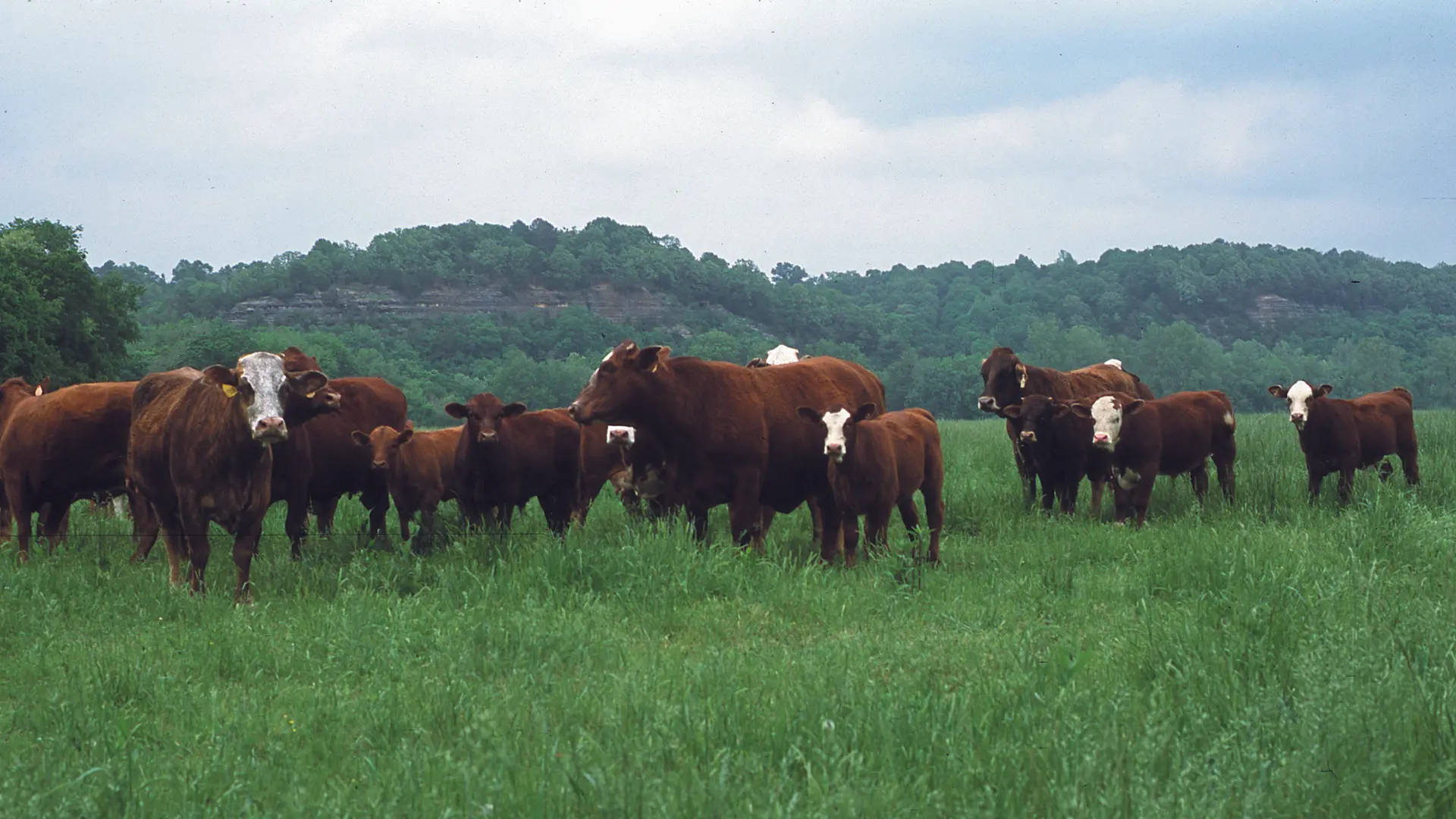
Cattle in a pasture in southwestern Missouri. Photo: Charlie Rahm, USDA Natural Resources Conservation Service, public domain.
How it works
Send the parcel
Address or APN, the acreage and anything you know about access or utilities.
We reply
An offer, or a clear reason we cannot make one.
You decide
No obligation. A title or escrow company closes the sale if you accept.
Send us the parcel and we reply with a cash offer, or a clear reason we cannot make one. You decide whether to accept, and a title or escrow company handles the closing. The page also covers how it works, how a cash sale compares with listing it, what to have ready, and the Missouri tax and closing rules that change what you net. Prefer to sell it yourself? Start with our guide to selling vacant land yourself.
What a Greene County cash offer looks like
Prices for vacant Greene County land vary a lot by location. A few acres on the edge of Springfield near Republic, Battlefield, Willard, Strafford or Rogersville attract one set of buyers. Rural parcels around Ash Grove, Walnut Grove and Fair Grove attract another. Land with a sinkhole, a creek in the floodplain, a shared well or a private drive does not share the same cash math as a clean road-front tract, even when the acre count looks close.
A cash offer from us will usually land under a polished, listing-ready retail ask. Certainty and speed are what you trade for that gap. If top-of-market price matters most and you can carry the land through months of showings, a listing may serve you better. If a clear answer matters more, send the parcel and compare our written offer with what you expect a listing to net.
Prefer the phone? Call 949-767-8885.
How selling to us works in Missouri
Send the address or APN, the acreage and any access or utility notes for your Missouri parcel. No obligation.
We check it against comparable listings and county assessments in St. Louis and Jackson and the rest of Missouri.
You get an offer, or a clear reason we cannot make one, and you decide.
A title or escrow company closes the sale and the county recorder of deeds records the deed. No agent commission; normal closing costs apply.
In Greene County, Missouri splits the paperwork across three county offices: the assessor classifies and values the property, the collector bills and collects the tax, and the recorder of deeds records the deed. We also look at the county rules covered below, because they change what a buyer can do with the land. After you accept, the closing follows title work, signer readiness and county recording, not a showing calendar.
Cash sale, agent listing or selling it yourself in Missouri
Sell to us for cash: no listing, no showings, no commission. The tradeoff is price. Expect an offer below what a patient retail buyer might pay, in return for speed and certainty.
List with an agent: you reach retail buyers, mostly around St. Louis and Kansas City, but you pay a commission and wait for a buyer. For land that can run to months.
Sell it yourself: you keep the commission and handle pricing, photos, questions and paperwork. You can list on AcreageSale.
In more detail for a Greene County parcel:
Sell to us for cash. The close follows title work. Normal closing costs apply and follow your contract, so read how the settlement statement splits each line. The land goes as-is: no staging, no brush clearing for shoppers, no waiting on a buyer's loan.
List with an agent. Rural land can sit for months, and showings are slower when a parcel is hard to reach. A broker's commission typically comes out of the sale proceeds, and retail buyers and lenders usually want legal access, a survey and answers about sinkholes, floodplain, septic and wells up front. Retail can clear higher when demand is strong and the parcel is easy to reach.
Sell it yourself. You set the ask, place the ads and answer every call. Ad spend can stay low, but your hours usually do not, and you still need title work and a recorded deed. Access questions and missing easement wording stay on your plate until a buyer signs.
Cash shortens the calendar and usually gives up some upside. Listing and selling it yourself keep more upside available and put the work back on you. Owners often ask for a cash number after a listing stalls. That is a timing decision, not proof the retail idea was wrong.
When a cash sale makes sense for Missouri land
- Inherited Missouri land you do not want to manage from a distance.
- You live outside Missouri and cannot walk the parcel or meet buyers.
- Taxes and upkeep cost you every year it sits.
- A listing went stale, or the land is remote or has access or title questions.
- The land owes property tax. The state rules are below.
- Several heirs or co-owners want one clean payout instead of hosting buyers.
- A sinkhole, floodplain, a private drive or septic and well limits have already made showings unrealistic.
Vacant Greene County land still produces a property tax bill every year. Owners who moved away often keep paying on ground they barely visit, and when the notices keep arriving and nobody plans to build, a long retail listing can feel heavier than the land is worth. If a house, a cabin or a structure someone uses stands on the land, tell us when you send it so we can say quickly whether the parcel fits.
Send the parcel and we reply with an offer, or a clear reason we cannot make one.
No obligation and no agent commission.
What to have ready for your Missouri parcel
- The address or APN, the acreage, and what the land is: Ozark wooded recreational and hunting acreage and cattle pasture and hay ground, or something else.
- Road access: paved, dirt or an easement.
- Power and water, or a well.
- Back taxes, liens or an unsettled estate. They change the paperwork, not whether you can ask.
Bring these too if you already have them: the newest county tax bill and parcel number, the current deed (and the recording number if you know it), any survey, plat or recorded easement for a private drive or shared access, estate or probate details, and the name of every owner who must sign. If the only way in is a shared drive or an unrecorded track, say so up front so the offer is not priced like open county-road frontage.
You do not need to pay for any of these just to ask for a number: a new appraisal, a new survey or soil test, brush clearing, fencing or staged photos, or a listing agreement signed before we confirm fit.
Land in Greene County, Missouri
Greene County is the most populous county in Missouri outside the Kansas City and St. Louis areas, with 298,915 residents (2020 census) on 678 square miles in the Ozark foothills.
Springfield is the county seat and its largest city, and land beyond the city limits falls under Greene County's own zoning and subdivision regulations. For a buyer of acreage the questions that matter most are how a tract may be split, where the sinkholes and floodplain are, and what a parcel needs for a well and septic system.
Greene County at a glance
County seat: Springfield. Other cities and towns: Ash Grove, Battlefield, Fair Grove, Republic, Rogersville, Strafford, Walnut Grove and Willard.
Unincorporated places include Cave Spring, Cody, Ebenezer, Elwood, Hackney, Haseltine, Logan, Mentor, Mumford, Palmetto, Plano and Turners.
2020 population 298,915, fourth-most-populous county in Missouri; 678 square miles, of which 2.6 square miles is water. Part of the Springfield metropolitan area.
Wilson's Creek National Battlefield lies in the county, which is in the Ozark Mountains and foothills.
County zoning applies only to unincorporated land; inside a city, that city's rules apply.
The Greene County land market
Land near Springfield and its edge communities, such as Republic, Battlefield, Willard, Strafford and Rogersville, is shaped by the city's growth and by buyers who want acreage within a short drive of it. Farther out, around Ash Grove, Walnut Grove and Fair Grove, the setting is more rural. Whether a lot is inside a city or in the unincorporated county decides which rules apply to it, so settle that first.
Zoning and splitting a tract
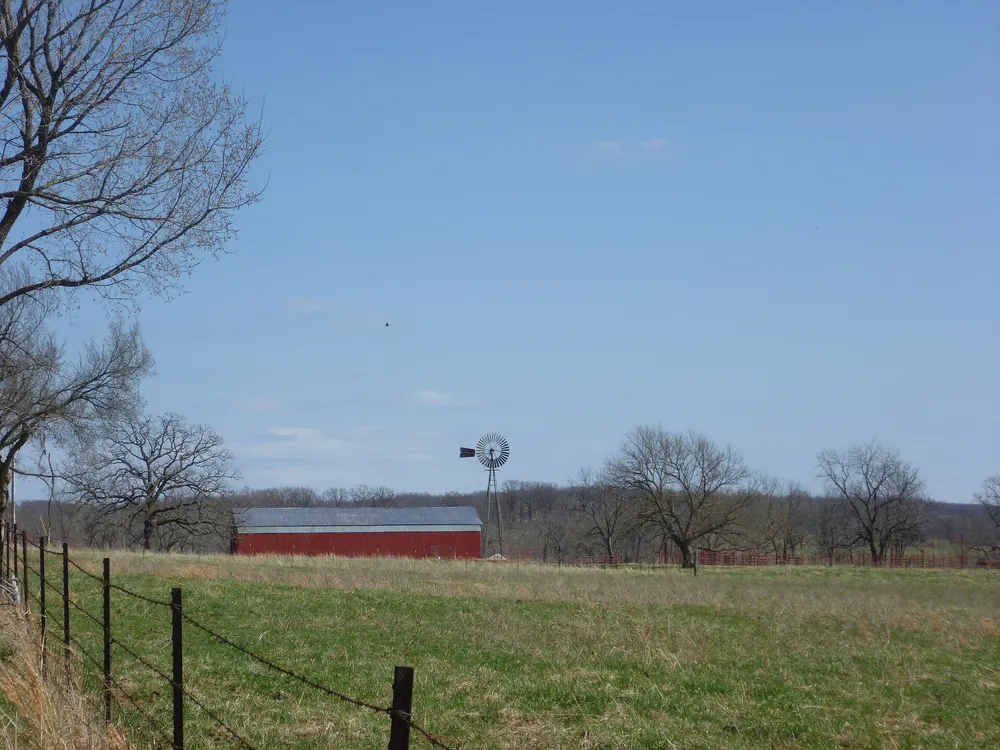
Greene County's Zoning Regulations, first adopted on December 26, 1978, divide the unincorporated county into districts such as A-1 Agriculture and A-R Agriculture-Residence. The A-1 article says tracts under ten acres can be created only through an administrative subdivision, that no more than two tracts under ten acres may be created, and that the remaining tract must keep a minimum of ten acres. It also treats parcels that were legally created before the regulation as legal tracts for permits and transfer of title.
The county's Subdivision Regulations, amended September 9, 2019, say an administrative subdivision is required whenever an unplatted tract under ten acres is created, reconfigured or joined to another tract. The Planning Director can approve it only if, among other conditions, no more than three tracts under ten acres result (counting any the owner keeps), each tract meets the zoning district's requirements, any tract without public road access has a private easement at least thirty feet wide, and no tract is so impaired by sinkholes or floodplain that successful development becomes questionable. Because the zoning and subdivision texts do not use identical limits, ask the Planning and Zoning Office which one controls your split before you sign a contract.
Sinkholes, wells and septic
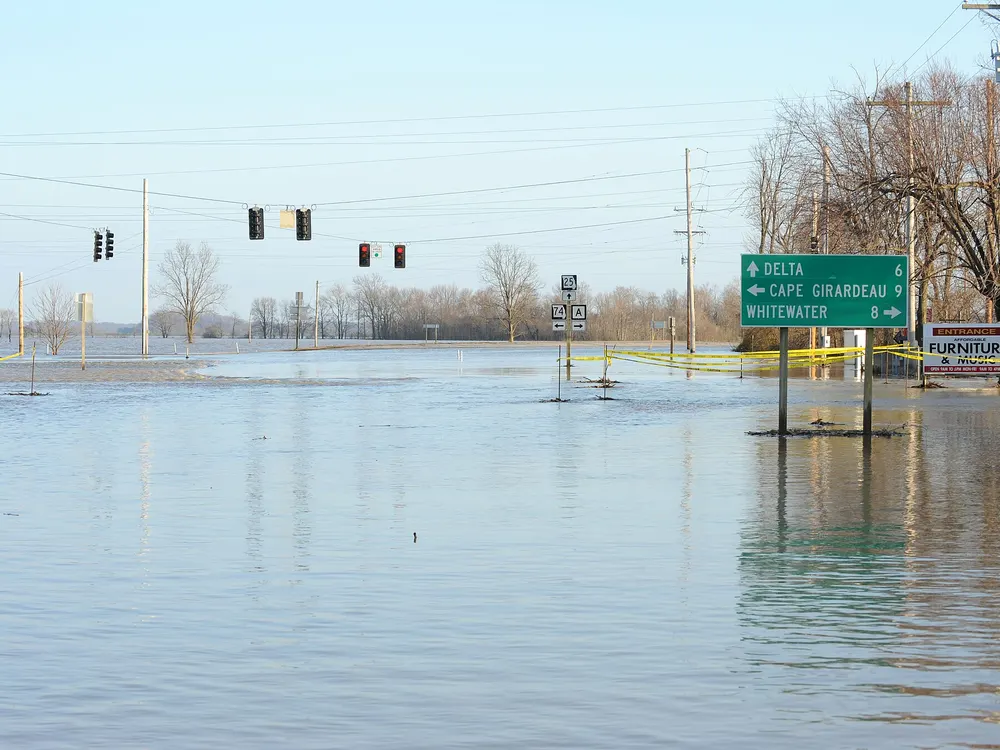
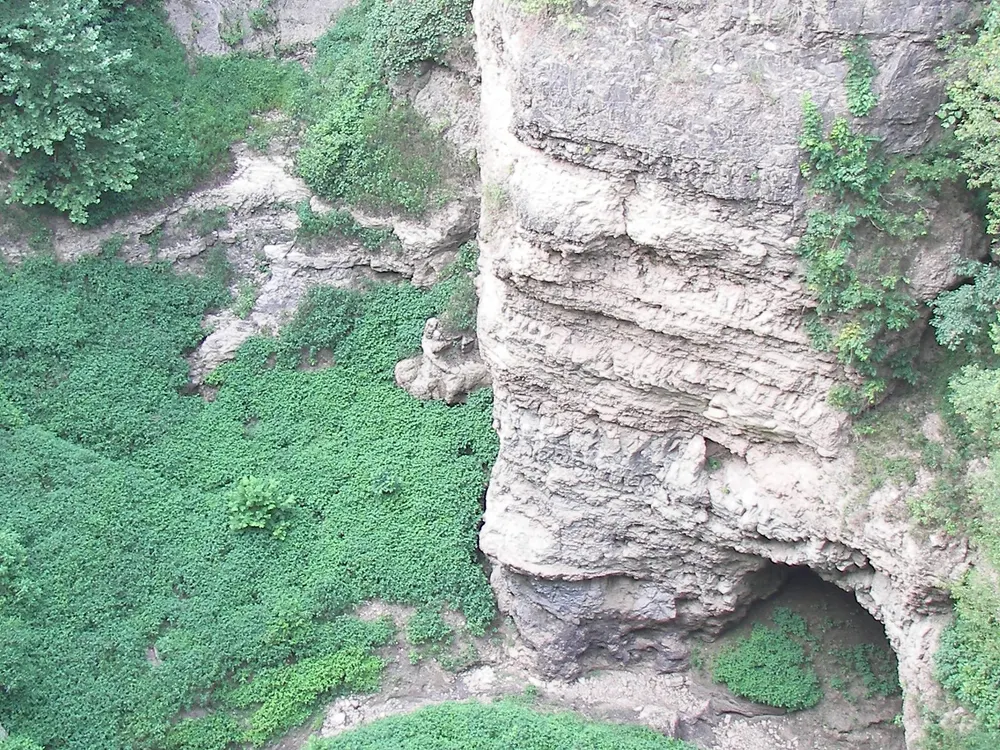
Sinkholes are common enough that the county regulates them. Its Sinkhole Use Standards prohibit dumping in sinkholes, bar construction within a sinkhole, bar waste disposal systems in one, and restrict filling or grading unless the Resource Management Department and County Stormwater Engineer approve. A property with a sinkhole that has been used for dumping cannot get building permits, zoning actions or a land division until it is cleaned out.
For lots created in the A-R and RR-1 districts, the county's notice to applicants says each proposed lot needs a soil scientist's site evaluation showing a suitable absorption-field area and a replacement area, that on-site wastewater systems must be set back 100 feet from a sinkhole rim and buildings 25 feet, and that groups of eight lots are generally to be served by a shared well. Driveways crossing a regulatory floodplain need a floodplain development permit.
How Missouri taxes the land
Missouri assesses agricultural land at 12% of productive value, residential property at 19% of true value and commercial and other property at 32%. The county's own land-use FAQ points out that property tax assessment in Missouri follows the use of the land, not its zoning, so only a change of use would change the assessment. Ask the Greene County Assessor how a parcel is classified before you count on the agricultural rate.
How do I sell inherited land in Missouri?
Missouri lets an owner name who gets land at death with a beneficiary deed. Under RSMo 461.025, a deed that conveys an interest in real property to a grantee designated by the owner, and that expressly states it is not to take effect until the owner's death, transfers the interest to the designated beneficiary effective on the owner's death, if the deed is executed and filed of record with the recorder of deeds of the city or county where the land is before the owner dies. It does not have to be supported by consideration or delivered to the beneficiary, and it can be used to transfer land to a trust, whether or not the trust is revocable.
The owner keeps control while alive. A beneficiary designation may be revoked or changed during the owner's lifetime, and where joint owners are involved a change needs the agreement of all those then living. A later designation revokes an earlier one unless it says otherwise, a will cannot revoke or change a designation unless the designation expressly gives the owner that right, and if the owner transfers the property during life, with or without consideration, the designation ends for that property (RSMo 461.033). The statute also says it does not invalidate a deed that is effective by law but not recorded until after the owner's death.
If there is no recorded beneficiary deed, the land does not pass under that section and goes through the owner's estate. A cash buyer can work from a recorded beneficiary deed, and the title company will say what else it needs. If several people inherited, each has to sign. Tell us whether a beneficiary deed was recorded and in which county, and how many heirs there are.
Landlocked Missouri land: the private road statute
Rural Missouri has parcels that were split off with no road. The private road statute is the legal route. RSMo 228.342 says a private road may be established or widened in favor of any owner of real property that has no access, or insufficiently wide access, to a public road, if the road sought is a way of strict necessity. "Strict necessity" includes the necessity to establish or widen a private road in order to use the property for the uses the law permits.
The process is a court case. The petition is filed and the proceeding is conducted in the circuit court of the county where the proposed road is to be located, and the owners of the land the road would cross must be named as defendants (228.342). On costs, the statute puts the costs of the proceeding up to and including the filing of the commissioners' report on the plaintiff, and lets the court assign later costs, including the costs of a jury trial, as it finds just, including, in a proceeding to obtain a maintenance order, assessing the costs to all benefitted homeowners (228.368).
For a seller, the point is that a statute is a fallback, not a recorded road. Buyers and lenders want recorded access, and a parcel whose only access depends on a court proceeding is hard to price and slow to sell. If you are selling a landlocked parcel, say so and tell us what you know about how it has been reached; the best fix is a recorded easement from a neighbor, signed before the sale. A Missouri real estate attorney can tell you whether a petition under 228.342 fits your land.
Selling Missouri farmland to a foreign buyer: the one percent rule
Missouri restricts who can buy agricultural land. The definitions in RSMo 442.566 say "agricultural land" is any tract in the state of more than five acres, inside or outside a city, that is capable without substantial modification of supporting an agricultural enterprise, and that adjacent parcels under the same ownership count as one tract. An "alien" is someone who is not a United States citizen and not a resident of the United States or one of its territories, and a "foreign business" is a business entity in which aliens own a controlling interest, with corporate form and trusts disregarded.
The limit is in RSMo 442.571. No alien or foreign business may acquire agricultural land in Missouri by grant, purchase, devise, descent or otherwise if the total aggregate alien and foreign ownership of agricultural acreage in the state exceeds one percent of the total aggregate agricultural acreage. A foreign owner who acquires land in violation stays in violation for as long as they hold an interest, and no one may hold agricultural land as an agent, trustee or other fiduciary for an alien or foreign business in violation of the sections, although security interests are not divested. A proposed acquisition is submitted to the director of the Department of Agriculture for review, but a sale or transfer of agricultural land is submitted for that review only if there is no completed IRS Form W-9 signed by the purchaser.
In a normal sale to a U.S. buyer the practical step is the signed W-9. If your buyer is a foreign person or a company controlled by foreign owners and your tract is more than five acres of land that could support farming, ask the Department of Agriculture about the review before you sign a contract, and put the closing contingency in writing. If you are not sure whether your land counts, send us the parcel number and the acreage and we will check it before we make an offer.
Selling land in Missouri: transfer taxes and land-tax rules
Missouri deeds have recording requirements that a seller can trip over. All deeds must contain a legal description of the land, and all deeds except easement or right-of-way deeds must contain a mailing address of one of the grantees, and the recorder of deeds shall not record the instrument without them (RSMo 59.330). A recording user fee of six dollars is charged by every recorder over and above any other fees, as a condition of recording any instrument (RSMo 59.319, effective August 28, 2026). The statutes do not say whether the seller or the buyer bears the recording cost, so settle it in the contract.
Missouri land assessed as agricultural property is reassessed as of the following January 1 when it becomes property other than agricultural, and a split-off of part of the land that is no longer agricultural, whether by conveyance or other action of the owner, subjects the separated land to reassessment as of the following January 1, without impairing the remaining land's agricultural valuation (RSMo 137.021). If you are selling off a lot for a home, expect that lot to be reassessed.
In Greene County, the Recorder of Deeds lists $26 for the first page and $3 for each additional page for a standard document, plus a $25 penalty if the document does not meet the county's formatting rules. Missouri does not charge a state deed transfer tax. Confirm current fees with the Greene County Recorder of Deeds at closing.
If the Greene County tax bill is behind
Unpaid tax does not stop a review. Under RSMo 140.150, land with delinquent taxes is subject to sale on the fourth Monday in August, and the taxes, penalty, interest and costs can be paid to the county collector at any time before the property is sold. After a tax sale, RSMo 140.340 gives the owner, a lienholder or an occupant the right to redeem for one year, on paying the costs of sale, interest and the purchase money. Sending us the tax statement lets us price with the balance in view. The usual way out is to have the title company pay the balance from the sale proceeds at closing.
Selling Missouri land with back taxes
Missouri sells land with delinquent property taxes at a delinquent land tax auction, and the buyer cannot take the deed right away. A purchaser at the auction must obtain a title search report and, at least ninety days before the date the purchaser is authorized to acquire the deed, notify the owner of record and anyone with a recorded lien or claim of the right to redeem the property, by both first class and certified mail (RSMo 140.405).
So an owner of land sold at auction gets a notice and a window to redeem. If you receive one, act on it quickly: contact the county collector for the redemption amount, and if you would rather sell, plan the closing so the redemption is completed before the purchaser can take the deed.
Missouri at a glance for landowners
Deeds are recorded with the county recorder of deeds.
Missouri has 114 counties plus the independent city of St. Louis.
Sale prices are generally not public: Missouri is a non-disclosure state.
Water law is riparian: owners of land touching a stream or lake have reasonable-use rights, sometimes with permits.
Where Missouri land sells fastest
Missouri land ranges across glaciated plains in the north, the forested Ozark Plateau across the south, and Bootheel Delta farmland in the far southeast. It sells fastest in and around St. Louis, Kansas City, Springfield, and Columbia. Counties owners ask about most: St. Louis, Jackson, Greene, Christian, Texas County, and Shannon. Remote parcels, far from a paved road, power or water, get a different review than lots on the edge of town.
Regional markets across Missouri
The Ozarks: Forested hills, lakes and springs in the south, in Taney, Stone, Shannon and Howell counties, popular for recreation and retirement.
Northern prairie: Productive cropland and pasture north of the Missouri River.
Kansas City and St. Louis fringe: Edge acreage in Cass, Jefferson, St. Charles and Franklin counties, where development pushes prices up.
Missouri land we review
Ozark wooded recreational and hunting acreage, cattle pasture and hay ground, row-crop land in the north and the Bootheel, and float-stream and river frontage in the Ozarks.
What affects the value of Missouri land
Ozark timber and pasture land is among the most affordable in the Midwest; northern cropland and acreage near Springfield or the metros costs more.
Missouri land values: what USDA data shows
USDA measured average farm real estate (all land and buildings on farms) in Missouri at $5,200 per acre in 2026, up 23% from $4,230 in 2022. That ranks Missouri 22 of the 48 states USDA reports, and it is 16% above the U.S. average of $4,500.
Pasture (grazing land), the closest USDA series to undeveloped rural land, averaged $2,850 per acre in 2026, up 16% since 2022 and above the U.S. pasture average of $2,000.
These are averages across working farms and ranches, not asking prices for any one parcel. A homesite near a town, a lot with road and power, or a parcel with water can sell well above these figures, and remote land with no access can sell well below them.
For comparison, USDA farm real estate averages per acre in the bordering states:
| State | USDA farm real estate average | Compared with Missouri |
|---|---|---|
| Iowa | $10,100 per acre in 2026 | 94% higher |
| Illinois | $9,250 per acre in 2026 | 78% higher |
| Kentucky | $5,600 per acre in 2026 | 8% higher |
| Tennessee | $6,500 per acre in 2026 | 25% higher |
| Arkansas | $4,350 per acre in 2026 | 16% lower |
| Oklahoma | $2,620 per acre in 2026 | 50% lower |
Frequently asked questions
How do I get a cash offer for my Missouri land?
Fill out the form on this page with the parcel's address or APN and acreage. We review it and reply with an offer, or a clear reason we cannot make one.
Do I have to accept the offer?
No. The review is free and carries no obligation. You decide whether to accept what we send.
Do I pay a commission to sell my Missouri land to you?
No agent commission when you sell directly to us. Normal closing costs still apply.
Who records the deed when I sell land in Missouri?
The county recorder of deeds. A title or escrow company normally handles it at closing.
What land do you review in Missouri?
Mostly Ozark wooded recreational and hunting acreage, cattle pasture and hay ground, and row-crop land in the north and the Bootheel, with a focus on St. Louis and Jackson and the surrounding area. Unusual parcels are welcome; the form has room for details.
Are land sale prices public in Missouri?
Generally no. Missouri is a non-disclosure state, so offers are built from comparable listings, county assessments and transactions that can be verified.
What happens to the property tax when I sell part of my Missouri farmland for a home?
Under RSMo 137.021, land split off so that it is no longer agricultural is reassessed as of the following January 1, and the remaining agricultural land keeps its valuation.
Do I get notice before someone gets a deed to my Missouri land bought at a tax auction?
Yes. At least ninety days before the purchaser may acquire the deed, the purchaser must notify the owner of record and holders of recorded liens of the right to redeem, by first class and certified mail (RSMo 140.405).
Can I sell inherited land in Missouri without probate?
If the owner filed a beneficiary deed with the recorder of deeds before they died (RSMo 461.025), the land passes to the designated beneficiary at death without passing under the estate. Without one, the land goes through the estate.
What can I do about a Missouri parcel with no road access?
RSMo 228.342 lets an owner of land with no access, or insufficient access, to a public road petition the circuit court to establish or widen a private road of strict necessity across neighboring land. A recorded easement is usually faster and easier to sell with.
Can a foreign buyer purchase Missouri farmland?
RSMo 442.571 bars an alien or foreign business from acquiring agricultural land (more than five acres, capable of farming) if total foreign ownership in the state would exceed one percent of agricultural acreage, and a sale is sent to the Department of Agriculture for review only if the purchaser has not signed an IRS Form W-9.
How many tracts under 10 acres can I create in the A-1 district in Greene County?
The A-1 zoning article allows no more than two tracts under ten acres through an administrative subdivision, with the remaining tract at least ten acres. The Subdivision Regulations allow up to three tracts under ten acres, counting any the owner keeps, when all conditions are met. Confirm which limit applies with the county.
Can you build on a sinkhole in Greene County?
No. County sinkhole standards bar construction and waste disposal systems within a sinkhole, and wastewater systems must be set back 100 feet from the rim for lots created under the A-R and RR-1 districts.
How many people live in Greene County, Missouri?
The 2020 census counted 298,915 residents over 678 square miles. Springfield is the county seat.
Sources
- Greene County, Missouri (2020 census figures, geography and communities)
- Greene County Zoning Regulations, Article V: A-1 Agriculture District
- Greene County Subdivision Regulations (amended September 9, 2019)
- Greene County Zoning Regulations, Article IV: Special Provisions (Sinkhole Use Standards)
- Greene County: notice to applicants for A-R zoning (wastewater, wells, sinkholes, floodplains)
- Greene County Resource Management: Land Use Plan FAQ
- Missouri State Tax Commission
- RSMo 461.025: deeds effective on death of owner (beneficiary deeds)
- RSMo 461.033: revocation or change of beneficiary designation
- RSMo 228.342 and 228.368: private roads of strict necessity and costs
- RSMo 442.566 and 442.571: foreign ownership of agricultural land
- RSMo 59.330: what shall be recorded, legal description required
- RSMo 59.319: recording user fee
- RSMo 137.021: valuation of agricultural land, reassessment on change
- RSMo 140.405: purchaser at delinquent land tax auction, notice of right of redemption
- USDA NASS, Land Values 2026 Summary (July 2026)
- RSMo 140.150: lands subject to sale for delinquent taxes
- RSMo 140.340: redemption of land sold for taxes
- Greene County Recorder of Deeds: formatting requirements and fees
On this page
Want a cash offer?
Send the parcel and we reply with an offer or a clear reason we cannot make one.
Request an offerKeep exploring
Nearby states
- Sell land fast in Iowa
- Sell land fast in Illinois
- Sell land fast in Kentucky
- Sell land fast in Tennessee
- Sell land fast in Arkansas
- Sell land fast in Oklahoma
- Sell land fast in Kansas
- Sell land fast in Nebraska
Helpful guides
- How to sell vacant land yourself
- Selling inherited land
- What an APN is and how to look one up
- How to verify legal access
- Perc tests and septic for raw land
- Mineral rights vs. surface rights
- How water rights work
- All land guides
Browse more
More in Missouri
Sell land in other states
- Sell land fast in Alabama
- Sell land fast in Alaska
- Sell land fast in Arizona
- Sell land fast in California
- Sell land fast in Colorado
- Sell land fast in Connecticut
- Sell land fast in Delaware
- Sell land fast in Florida
- Sell land fast in Georgia
- Sell land fast in Hawaii
- Sell land fast in Idaho
- Sell land fast in Indiana
- Sell land fast in Louisiana
- Sell land fast in Maine
- Sell land fast in Maryland
- Sell land fast in Massachusetts
- Sell land fast in Michigan
- Sell land fast in Minnesota
- Sell land fast in Mississippi
- Sell land fast in Montana
- Sell land fast in Nevada
- Sell land fast in New Hampshire
- Sell land fast in New Jersey
- Sell land fast in New Mexico
- Sell land fast in New York
- Sell land fast in North Carolina
- Sell land fast in North Dakota
- Sell land fast in Ohio
- Sell land fast in Oregon
- Sell land fast in Pennsylvania
- Sell land fast in Rhode Island
- Sell land fast in South Carolina
- Sell land fast in South Dakota
- Sell land fast in Texas
- Sell land fast in Utah
- Sell land fast in Vermont
- Sell land fast in Virginia
- Sell land fast in Washington
- Sell land fast in West Virginia
- Sell land fast in Wisconsin
- Sell land fast in Wyoming
About Acreage Sale
Photo credits
- River-landscape-river.jpg - panoramio by Good Free Photos, CC BY 3.0, source
- NRCSMO02068 - Missouri (4815)(NRCS Photo Gallery): Charlie Rahm, USDA Natural Resources Conservation Service, public domain. source
- FEMA - 34480 - Flood water covers roads in in rural Missouri: Jocelyn Augustino, public domain. source
- Missouri farm: Jatpainter1, CC BY-SA 4.0. source
- Grand Gulf cave 1-02Aug07: Kbh3rd, CC BY-SA 3.0. source


Ready to sell without the wait?
Take a cash offer, or list it yourself with AI. No agent commission on either.
This page gives general information about selling vacant land in Greene County, Missouri for cash. It is not legal, tax, title or appraisal advice. Confirm zoning, fees, tax class and deed wording with the county offices and a title or escrow company.